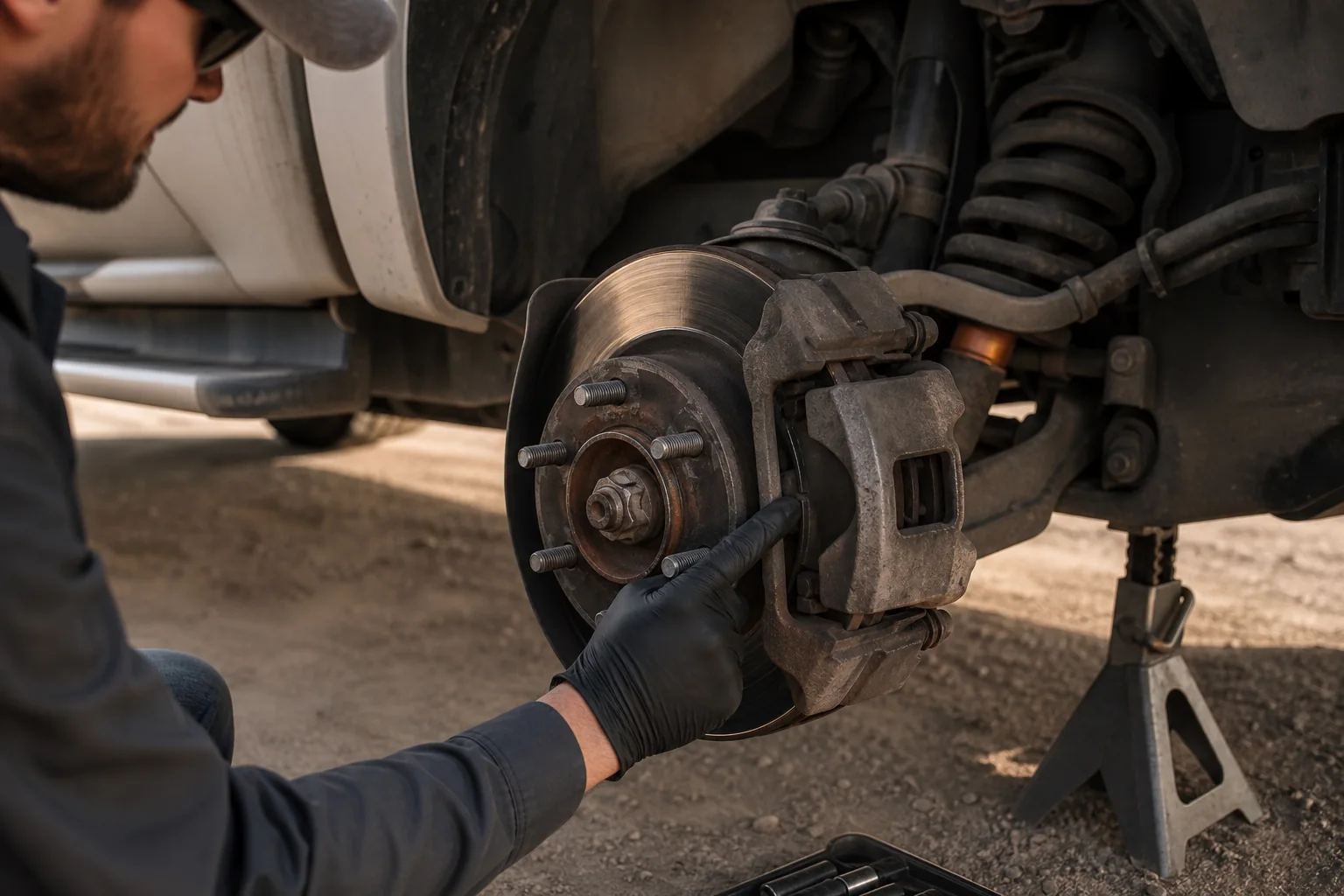
Changes in pedal feel, stopping behavior, sound, or warning lights deserve prompt attention because brake problems rarely improve on their own.
Pay attention to feel and stopping behavior
A pedal that becomes soft, sinks, pulses unexpectedly, feels unusually hard, or needs more travel can indicate a problem. Pulling, increased stopping distance, a vehicle that does not hold when parked, or a brake warning light also warrants inspection.
Use sounds and smells as clues
A light occasional squeak is not a complete diagnosis. Persistent grinding, scraping, clunking, or a hot chemical smell after normal driving is more concerning. Smoke or one wheel that is much hotter than the others can indicate a dragging or overheated brake; stop in a safe place and do not touch the wheel or brake assembly.
Know when not to drive
- The pedal goes close to the floor or braking effort drops suddenly
- Brake fluid is visibly leaking
- The red brake warning stays on with the parking brake released
- The vehicle pulls sharply, grinds continuously, or cannot stop predictably
Use towing or on-site help when braking is uncertain. A short trip is not worth gambling on the remaining system.
Expect an inspection, not a pad-only guess
A useful brake evaluation considers pads or shoes, rotors or drums, calipers, hoses, lines, fluid, hardware, parking-brake operation, tires, and related suspension concerns. Replacing the most familiar wear item without inspecting the system can miss the actual cause.
This guide cannot determine whether a vehicle is safe to drive. If braking feels unreliable, park it and get hands-on help.
This article provides general information, not a vehicle-specific diagnosis or a promise that mobile service is appropriate. Stop operating a vehicle when safety is uncertain and arrange hands-on inspection.
Related service
Need help with this problem?
Share the vehicle details, location, symptoms, and operating status so we can discuss a practical next step.