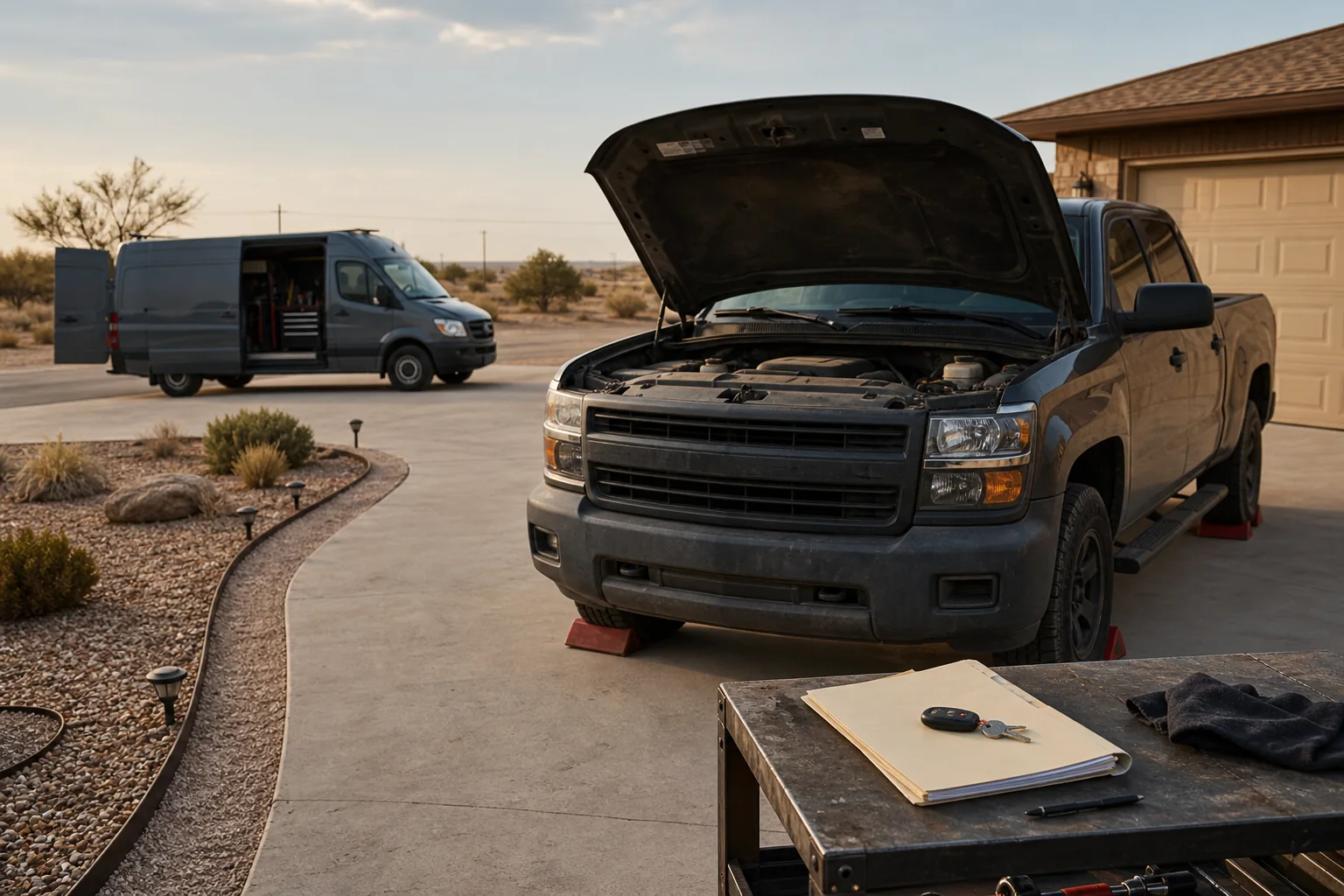
A few practical steps can make on-site diagnosis and repair safer, faster, and easier to plan.
Send useful information before the appointment
Provide the vehicle year, make, model, mileage, exact location, symptoms, and whether it can move under its own power. Include photos of the vehicle, warning messages, leaks, or damaged areas when they add context. Mention previous diagnosis or recent parts replacement without assuming that work identified the root cause.
Choose a safe, workable space
Park on firm, level ground away from moving traffic. Leave room around the vehicle and avoid soft dirt, steep slopes, active loading zones, and areas where property management prohibits repairs. If the vehicle is in a garage, ask whether the expected work needs more ventilation or overhead clearance.
- Unlock gates and provide any access instructions
- Move other vehicles, pets, equipment, and clutter away
- Confirm that the mechanic may work at the property
- Tell the mechanic about site hazards before arrival
Keep keys and history available
Have every relevant key or fob ready, including wheel-lock keys. Service records, recent invoices, and a list of parts already replaced can prevent duplicated investigation. Remove valuables and provide access to the trunk, battery compartment, or equipment enclosure if needed.
Plan for a diagnosis before a repair
Some visits can move directly into a repair; others need testing first, a part order, different equipment, or shop facilities. Keep your schedule flexible enough for the technician to explain findings and options.
Unless requested, leave parts in place. An intact system often gives the technician better evidence and reduces the chance of missing hardware or introduced faults.
This article provides general information, not a vehicle-specific diagnosis or a promise that mobile service is appropriate. Stop operating a vehicle when safety is uncertain and arrange hands-on inspection.
Related service
Need help with this problem?
Share the vehicle details, location, symptoms, and operating status so we can discuss a practical next step.