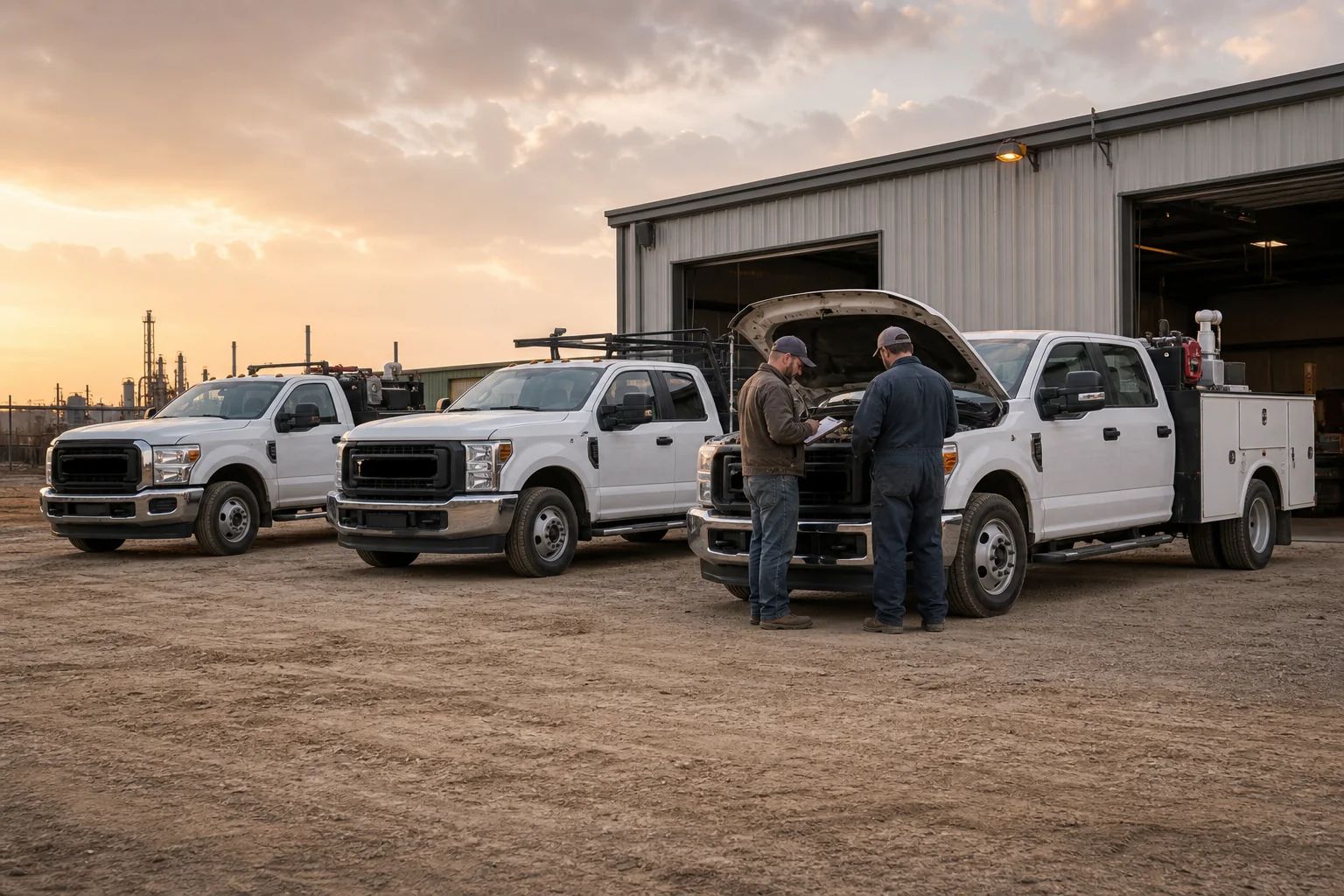
A clean vehicle list, clear priorities, and accurate site details help operators reduce avoidable back-and-forth when coordinating mobile work.
Build one reliable vehicle list
For each unit, record fleet number, VIN, year, make, model, engine, mileage or engine hours, plate, normal location, and operating status. Match reported symptoms to the correct unit. Photos of the VIN label and odometer can prevent transcription errors.
Separate urgent faults from planned work
Flag vehicles that are down, unsafe to operate, intermittently failing, or still in service. Note deadlines and operational consequences without labeling every request an emergency. Group routine services by location and type when practical, but keep diagnostic complaints distinct so each receives proper testing.
Share access and site constraints
- Site contact and authorized decision-maker
- Gate, security, induction, and parking requirements
- Firm level work area and available clearance
- Keys, wheel-lock keys, and equipment access
- Rules for fluids, waste, noise, or work hours
Remote yards and active industrial sites need more coordination than a standard driveway. Confirm requirements before the service vehicle arrives.
Track decisions after the visit
Keep the complaint, test result, work performed, parts used, deferred items, and return-to-service decision together. Consistent records make repeat failures easier to recognize and improve future scheduling.
Parts, weather, site conditions, repair complexity, and the need for shop equipment can change what is completed in one mobile visit.
This article provides general information, not a vehicle-specific diagnosis or a promise that mobile service is appropriate. Stop operating a vehicle when safety is uncertain and arrange hands-on inspection.
Related service
Need help with this problem?
Share the vehicle details, location, symptoms, and operating status so we can discuss a practical next step.