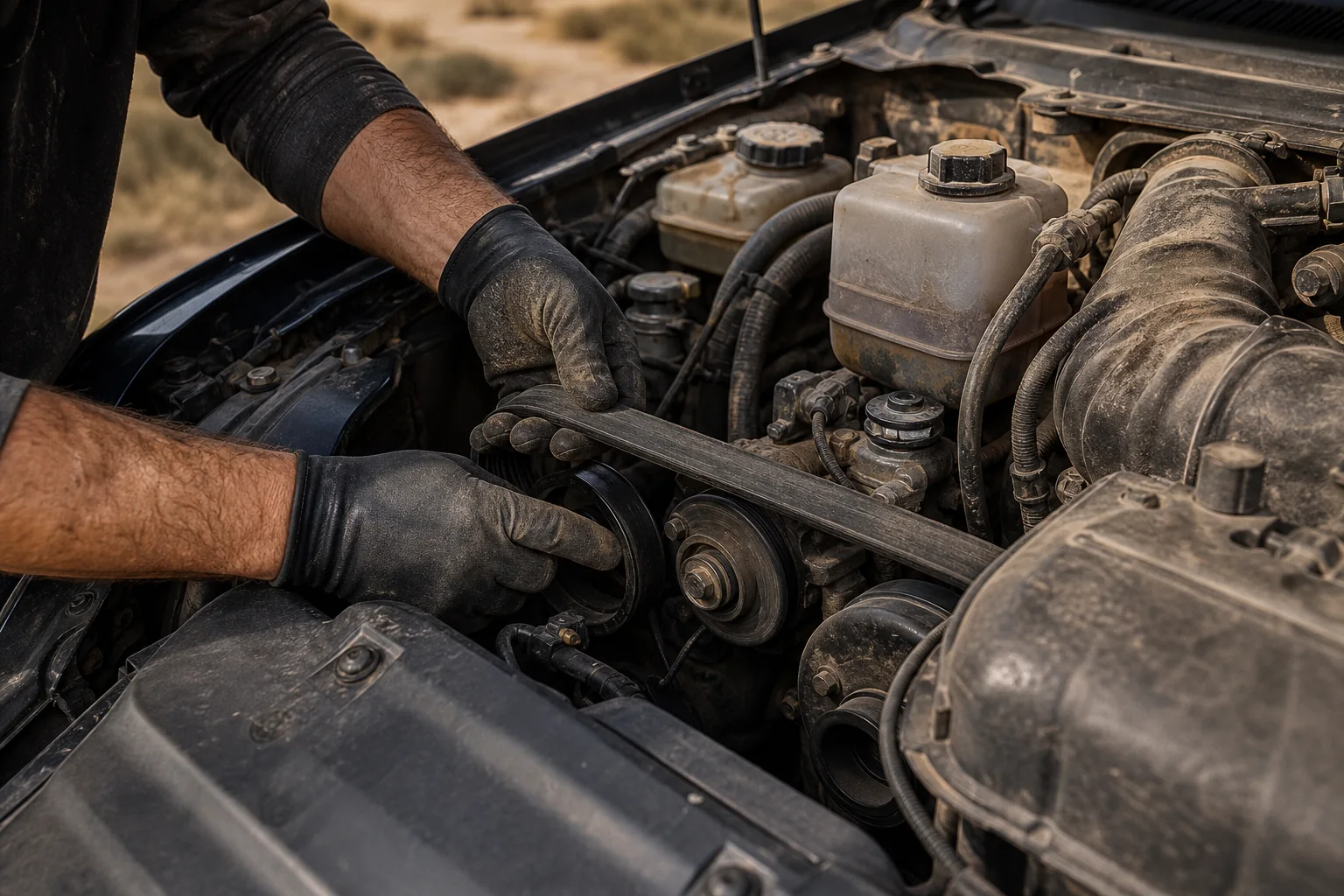
Mileage matters, but changes in sound, feel, fluid condition, and starting behavior can also signal that a working vehicle needs attention.
Start with the schedule, not a universal interval
The owner’s manual is the best starting point because maintenance intervals vary by engine, fluid specification, use, and operating conditions. West Texas heat, dust, idling, towing, short trips, and jobsite use may qualify as severe service. Review both mileage and elapsed-time requirements.
Look for changes between services
- Longer cranking, slower starting, or repeated battery trouble
- Squealing, chirping, cracking, or glazing around belts
- Fluid spots, falling reservoir levels, or a new burning smell
- Rough idle, hesitation, reduced fuel economy, or loss of power
- Uneven tire wear, pulling, vibration, or a changing brake pedal
These signs can have many causes. They are reasons to inspect, not instructions to replace a specific part.
Treat fluid condition carefully
A low fluid level may indicate leakage or consumption; simply topping it off can hide the trend. Use only the specified fluid and never open a hot cooling system. A sudden oil-pressure warning, rising temperature gauge, or active leak deserves prompt attention rather than waiting for the next routine service.
Build a simple maintenance record
Record date, mileage, service performed, fluid specification, and parts used. For work vehicles, note engine hours when available. A consistent log makes recurring problems visible and helps a technician distinguish overdue service from a new fault.
A good inspection can identify visible wear and testable problems, but no checklist can guarantee that every component will last until the next visit.
This article provides general information, not a vehicle-specific diagnosis or a promise that mobile service is appropriate. Stop operating a vehicle when safety is uncertain and arrange hands-on inspection.
Related service
Need help with this problem?
Share the vehicle details, location, symptoms, and operating status so we can discuss a practical next step.