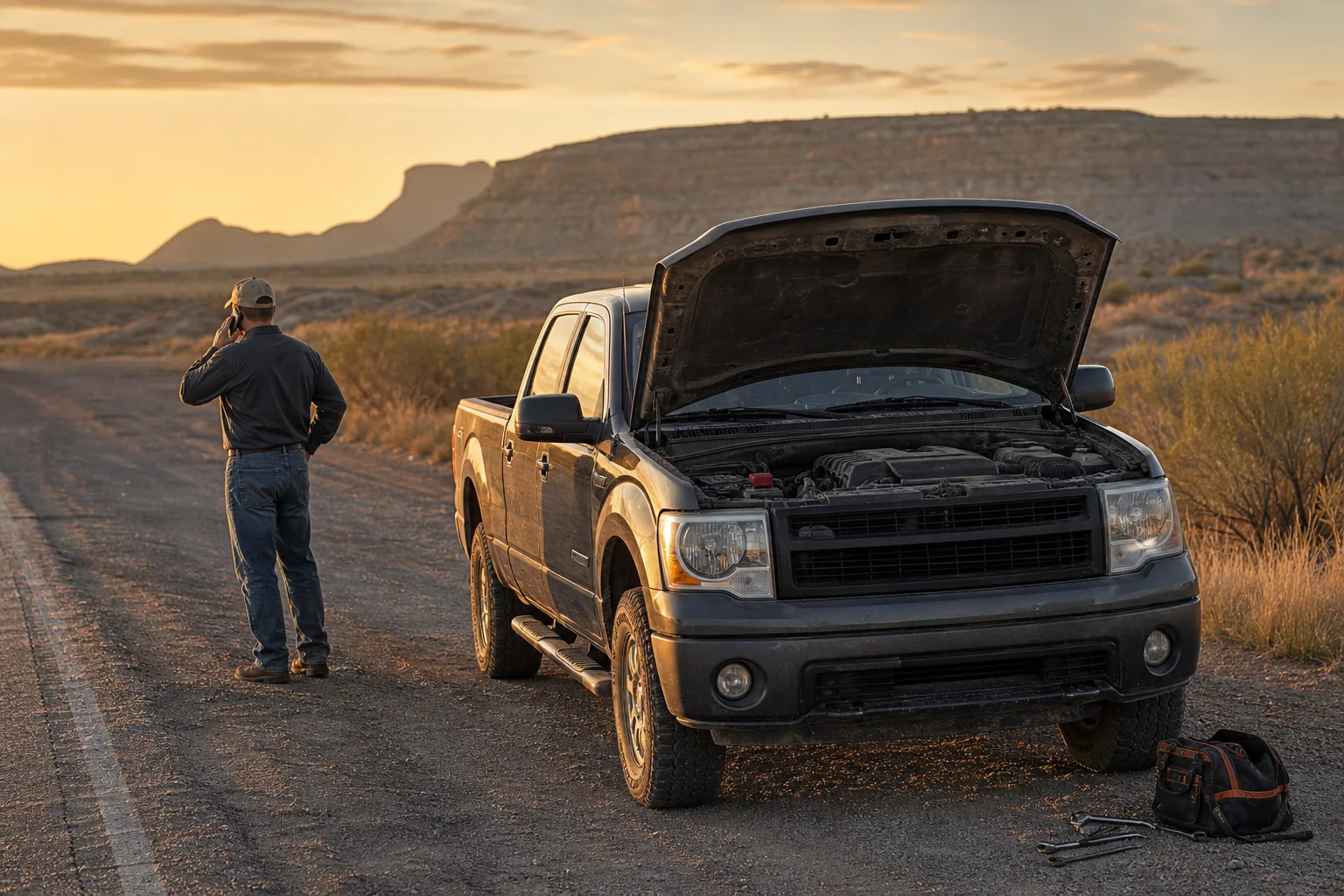
A rising temperature gauge calls for a safe stop and a cool-down—not an attempt to push a few more miles through West Texas heat.
Recognize the warning and reduce risk
A temperature warning, gauge moving into the hot range, steam, coolant smell, or sudden loss of cabin heat can indicate a cooling problem. Turn off the air conditioning, move out of traffic as soon as it is safe, shut the engine off, and switch on the hazard lights.
Let the system cool completely
Do not remove a radiator or pressurized reservoir cap while the engine is hot. The system can release scalding coolant without warning. Keep clear of fans, belts, and pulleys; electric fans may start even with the engine off.
Rapid temperature change can damage components, and opening the system while pressurized can cause severe burns.
Observe without taking the system apart
From a safe distance, note where steam appeared, whether coolant is dripping, how quickly the gauge rose, and what the vehicle was doing at the time. After the engine is fully cold, a technician can inspect coolant level and condition, hoses, belts, fan operation, leaks, pressure, and related controls.
Decide whether the vehicle should move
Restarting an overheated engine can turn a cooling-system repair into major engine damage. Do not continue if the warning returns, coolant is lost, the engine runs poorly, or there is knocking. Arrange diagnosis or towing based on the symptoms and location.
This article provides general information, not a vehicle-specific diagnosis or a promise that mobile service is appropriate. Stop operating a vehicle when safety is uncertain and arrange hands-on inspection.
Related service
Need help with this problem?
Share the vehicle details, location, symptoms, and operating status so we can discuss a practical next step.