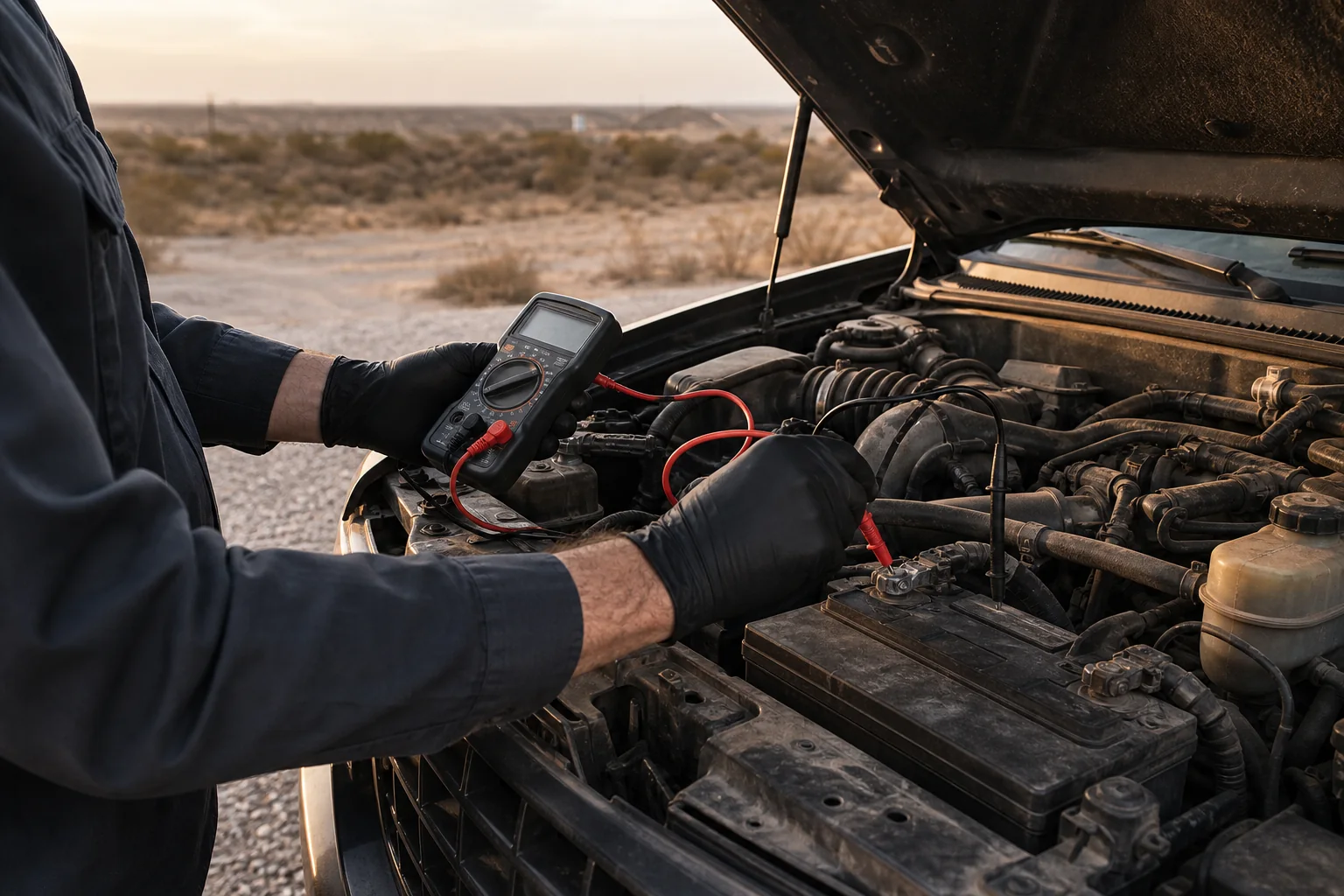
The sounds, lights, recent behavior, and vehicle details that help turn “it won’t start” into a more useful first conversation.
Start with what the vehicle actually does
“No-start” can describe several different behaviors. Turn the key or press the start button once, then listen and watch. Does the engine crank at its normal speed, crank slowly, make one solid click, chatter repeatedly, or stay completely silent? A short phone video can preserve the sound without repeated attempts.
Also note whether the dash lights remain bright, dim sharply, or never illuminate. Those observations do not prove a cause, but they help separate a cranking problem from an engine that cranks but does not run.
Gather the details that narrow the possibilities
- Year, make, model, engine size if known, and approximate mileage
- Where the vehicle is parked and whether there is safe working space
- When it last started normally and what happened immediately before the problem
- Recent battery, starter, alternator, fuel, ignition, or electrical work
- Any warning lights, unusual smells, leaks, or security-system messages
If the failure is intermittent, describe the pattern: only after a hot drive, after sitting overnight, during cold weather, or without any obvious pattern.
Avoid repeated cranking and guesswork
Long or repeated starting attempts can discharge the battery, overheat a starter, or flood some engines. Stop if you smell fuel, see smoke, hear grinding, or notice damaged wiring. Do not bypass safety switches or strike electrical components.
A vehicle that starts with assistance may have a discharged battery, a charging problem, a poor connection, or another issue. Testing is what separates them.
Make the service location clear
Share whether the vehicle is in a driveway, parking lot, roadside location, gated yard, or jobsite. Mention low clearance, locked gates, loose ground, traffic, or property rules. Mobile work needs a legal, stable, reasonably level area with room to open doors and the hood.
Clear information helps the mechanic arrive prepared, but the final diagnosis still depends on hands-on tests.
This article provides general information, not a vehicle-specific diagnosis or a promise that mobile service is appropriate. Stop operating a vehicle when safety is uncertain and arrange hands-on inspection.
Related service
Need help with this problem?
Share the vehicle details, location, symptoms, and operating status so we can discuss a practical next step.