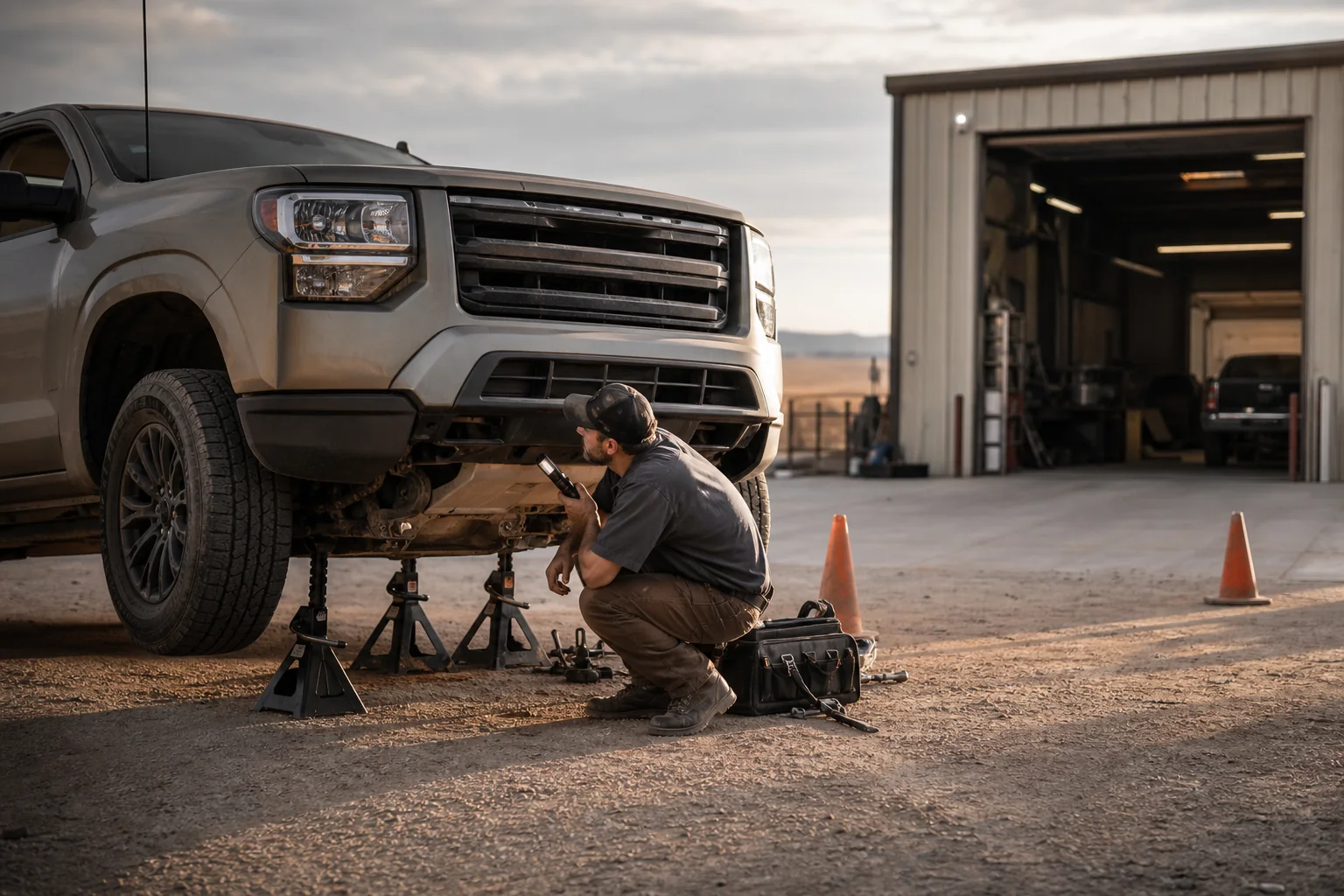
Mobile service is convenient, but safety, access, equipment, weather, and repair complexity determine where work should happen.
The location must support safe work
A mobile mechanic needs firm, reasonably level ground, legal permission to work, room around the vehicle, and separation from traffic or active equipment. Loose caliche, steep driveways, roadside shoulders, low garages, and crowded jobsites can make even a familiar repair unsuitable.
Some work depends on shop equipment
Repairs that require a vehicle lift, alignment rack, tire machine, extensive fabrication, controlled cleanliness, heavy component handling, or prolonged disassembly may belong in a shop. The same is true when diagnosis requires equipment or test conditions that cannot be brought to the site.
Conditions can change the answer
High wind, lightning, extreme heat, darkness, or blowing dust can make an otherwise mobile-friendly repair unsafe or unreliable. A broken fastener, hidden damage, unavailable part, or incorrect previous repair may expand the scope after work begins.
Use mobile diagnosis to choose the next step
An on-site visit can still be valuable when a full repair is not practical. Testing may identify the affected system, determine whether the vehicle should remain parked, and give a shop a clearer starting point.
If braking, steering, oil pressure, temperature, fuel leakage, or severe mechanical noise is involved, ask for professional guidance before moving the vehicle.
This article provides general information, not a vehicle-specific diagnosis or a promise that mobile service is appropriate. Stop operating a vehicle when safety is uncertain and arrange hands-on inspection.
Related service
Need help with this problem?
Share the vehicle details, location, symptoms, and operating status so we can discuss a practical next step.